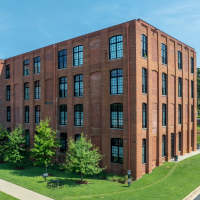
Lofts at Inman Mill is a powerful example of how historic preservation and thoughtful design can breathe new life into a community landmark. Built in 1901, the Inman Textile Mill was founded by James A. Chapman and began production in 1902, playing a vital role in Inman and Spartanburg County’s textile economy for nearly 100 years. Designed by prominent mill architect W.B. Smith Whaley, the mill’s massive brick structure and distinctive craftsmanship defined the area’s industrial landscape.
After the mill closed in 2001, the once-bustling property sat vacant and deteriorated for nearly two decades. In 2016, its historic and architectural significance was formally recognized when the property was listed on the National Register of Historic Places. Shortly thereafter, DNA Workshop undertook the ambitious task of restoring the long-abandoned mill, utilizing historic tax credits to transform the structure into a modern multifamily community.
The original 350,000-square-foot building features load-bearing masonry walls and heavy timber construction, which—despite its age—still showcased striking Romanesque Revival details, including decorative brick arches. During the renovation, oversized windows were carefully installed within those original arches, preserving the mill’s historic character while flooding the interiors with natural light.
Each of the 159 loft-style apartments was thoughtfully designed to highlight the building’s industrial roots. Exposed brick, restored original wood floors, visible ductwork, and soaring 9- to 12-foot ceilings are paired with sleek, modern finishes to create bright, open living spaces that honor the mill’s past.
In addition to the residences, a clubhouse was seamlessly built within the historic structure to provide a gathering place for residents, while new amenities—including a resort-style pool and landscaped grounds—enhanced the surrounding property.
What was once a blighted and abandoned eyesore has been fully reimagined into Lofts at Inman Mill, a luxury 159-unit apartment community that once again serves as a cornerstone of Inman. The renovation not only preserved an important piece of local history, but also sparked renewed life and pride in the area—proving that the past can be preserved while building for the future.